
|
Substitutes for toxic volatile solvents to clean printing plates, dissolve varnishes, grounds and oil-based inks. Extract from GREEN PRINTS by Cedric Green published by Ecotech Design, Sheffield, UK. - a handbook on new methods for non-toxic intaglio etching and metal plate printmaking, featuring the technique of Galv-Etch, a modern development of the 19th century electrolytic technique of Electro-Etching, and introducing Fractint and other new alternative methods avoiding the use of solvents and chemicals harmful to health and to the environment.
COOKING OIL AND OTHER CLEANING AGENTS For most of the uses for which one used to use naphtha (turpentine substitute, white spirit, etc.) - cleaning inked plates, tools, brushes, inking slabs, hands, or any surface covered with oil-based printing ink - the simplest substitute is a two part process - first use vegetable cooking oil, and then biodegradable domestic washing-up liquid. I use rape seed oil or grape seed oil, as it is inexpensive in France, but there are others which have the same effect and may be cheaper in other countries. The effect of the oil is to dissolve and thin the ink allowing it to be easily removed. To clean an inked plate, first pour a little pool of oil in the middle of the plate, and rub it all over with fingers, and if the plate has deeply bitten areas, use an old toothbrush, to get the oil well into the crevices. Leave it for fifteen to twenty minutes and then wipe off the dissolved ink. Repeat the process if necessary, before cleaning the oil off the plate with domestic detergent liquid, preferably the biodegradable kind. The cloth or absorbent paper used to wipe the plate can be used to wipe palette knives, inking slabs and fingers. Rub clean oil into hands to remove ink residues, then wash with soap and water.
There are sometimes occasions when very stiff ink, or slightly dried ink is difficult to completely remove, and that is when you can use Vaseline mineral oil to dissolve it. Pour a very small amount in the middle of the plate and spread it with a plastic spatula. Unlike cooking oil, Vaseline oil can be left on the plate for much longer to dissolve the ink, then used as a temporary protection against oxidation if the plate is going to be used again soon. But if plates are to be stored for a long time, clean them with biodegradable detergent, and brush them with a thin film of Vaseline oil, and wrap them in clingfilm. VCA (vegetable cleaning agent) has been promoted in the European Community as a replacement for volatile cleaning solvents in the printing industry. It is now increasingly available in most European countries for printmakers, and I have been using small quantities of it with caution since 2004. The evidence for its safety is anecdotal and not backed up by rigorous laboratory evaluation and Safety Data Sheets (SDS) or Material Safety Data Sheets (MSDS). Unfortunately more and more commercial cleaning products have become available that call themselves "Bio solvents" or "Eco cleaners" and claim to be substitutes for the old solvents, and some are called "vegetable oil based". But many are based on a chemical called Ethyl Lactate which is noxious and dangerous to use. The regulations about labelling is not rigorous enough to be confident that what one is buying is safe to use. .VCAs are vaguely described as "fatty acid esters", but this is not sufficient, because "bio-diesel" is a "Fatty Acid Methyl Ester" well known in the USA as FAME, and I suspect that many of the products sold as VCAs are just repackaged "Bio-Diesel". Commercial Bio-Diesel has other additives to make it work in current diesel engines. So until the chemical that is used in a so-called VCA is accurately labelled and is covered by an SDS or MSDS, I cannot now recommend its use. Normally if you have been using fractint and stopping out areas with an ethanol based shellac varnish, then you will have to remove that with ethanol (ethyl alcohol), and a lot of the ink ground will come off with the alcohol. But do not use “denatured alcohol” which usually has a high proportion of methyl alcohol. Any ink ground residues that are persistant will probably come off after being left to dissolve in Vaseline oil. Failing that, soak the plate in a shallow tray of vinegar for a while, and the dried ink can be brushed off with an old toothbrush. If ink grounded plates have been left for months or dried on a plate at too high a temperature the ink may have become hard baked – like an enamel. A long soak in vinegar will remove the ink. Needling an ‘enamelled’ plate may be difficult, and it may be better to remove the ink and start again. But if the enamelled ink is the result of baking it after a salt tint or sugar lift tint process, then you can continue to etch it, perhaps taking a little longer with the first step which has to break through the thin skin of residual oil on the plate. .
|


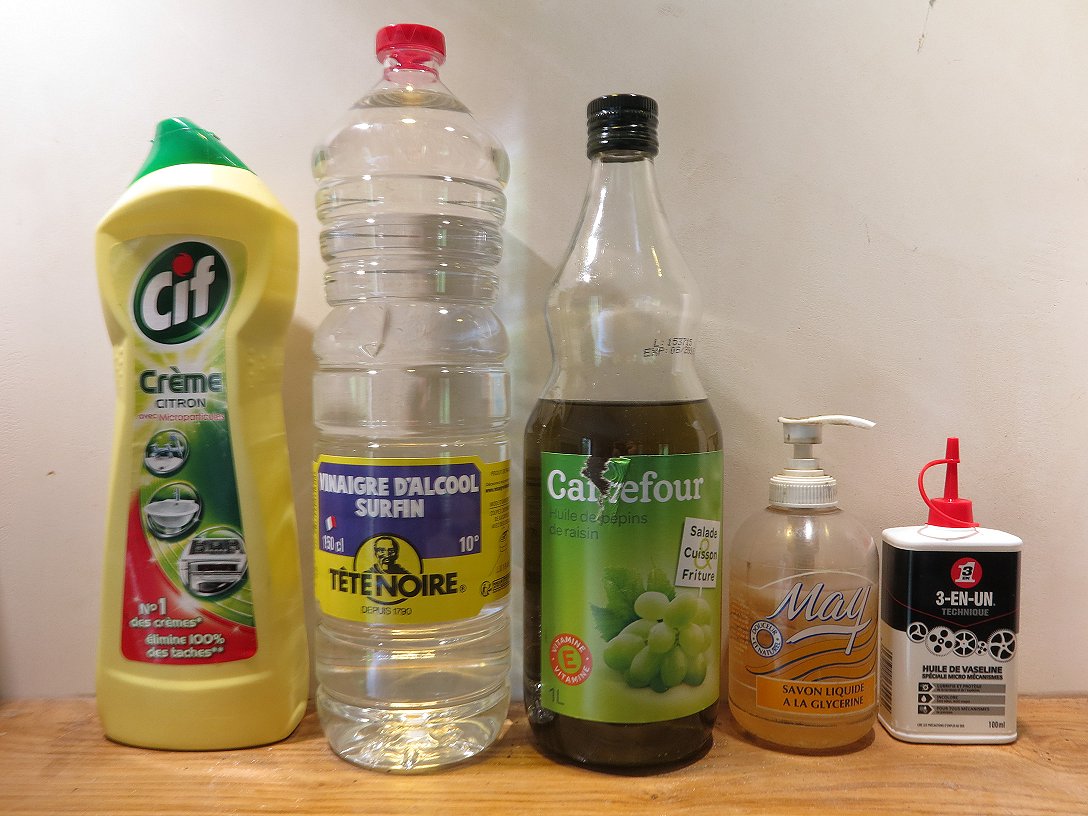
 left to right :